 Akhand Singh
Building Scalable UI Architectures · Part 1
Lessons From Leading Frontend at Multiple Startups
Over the past few years, I have had the opportunity to lead frontend engineering efforts at fast-paced startups and enterprises, often joining as the first UI/UX engineer or as a founding member of the frontend team. Each time, I have faced the same core challenge:
How do we build a UI architecture that allows us to move quickly today without hindering our progress tomorrow?
In the early stages, speed is crucial. However, without the right foundation, every new feature becomes slower to implement, harder to test, and messier to maintain.
What I have discovered through experience with multiple products is that the solution lies in a layered, SDK-first approach to UI architecture. While the specific needs may vary from company to company, the fundamental structure has remained remarkably consistent.
In this post, I’ll walk through how we’ve approached this architecture, how it evolves, and why it’s worked well across different teams and products.
A Scalable Foundation: Layered by Design
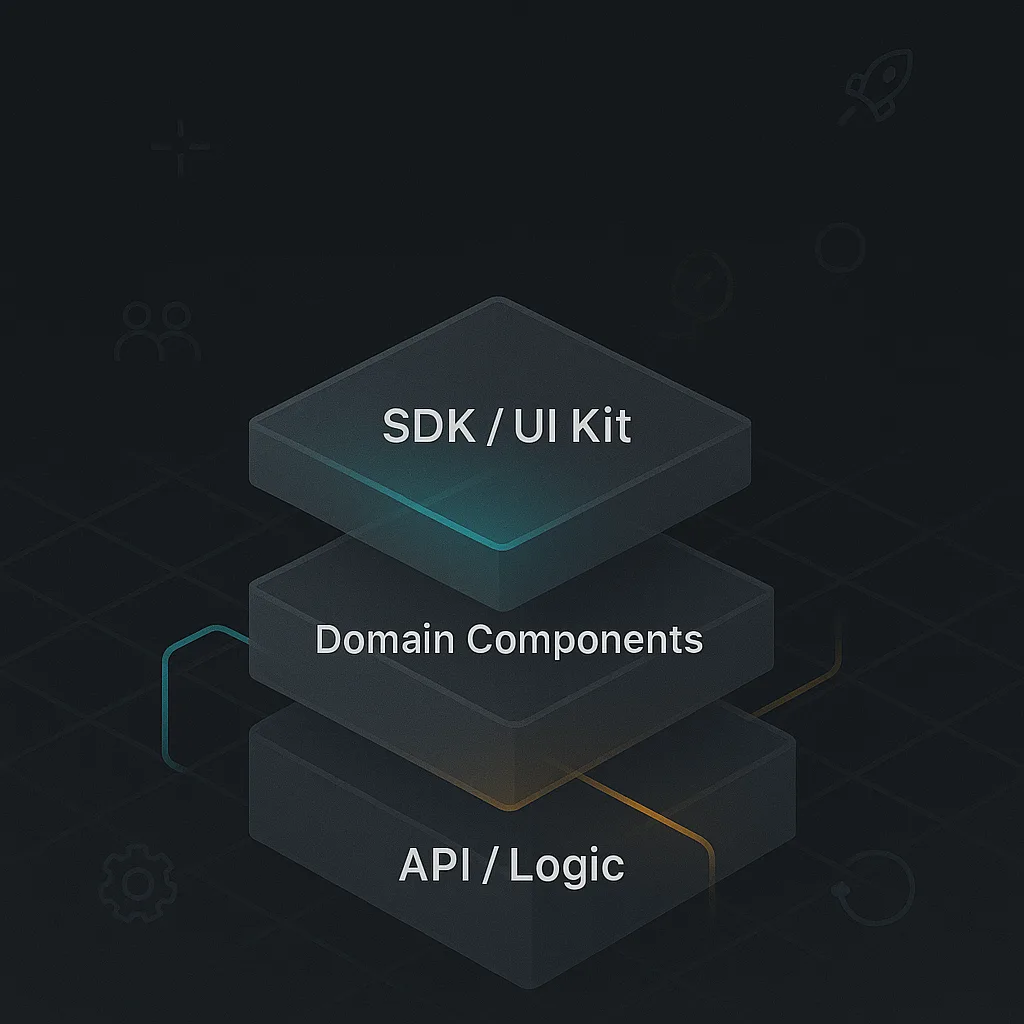
Every time I’ve helped design a new frontend system, I’ve leaned on a three-layer foundation that keeps responsibilities clean and scalable.
1. The SDK Layer
This is our internal UI kit, a lightweight design system implemented as code.
- Reusable visual components (buttons, inputs, modals, layouts, etc.)
- Purely presentational, no business logic
- Consistent styling, behavior, and accessibility
- Built to be composable and extendable
Sometimes this layer grows into a formal design system; other times, it stays lean and pragmatic. Either way, it always makes the difference between a chaotic UI and a consistent product experience.
2. The Domain Layer
This is where the actual product lives, feature-specific components organized by business domain.
- Built using SDK components
- Encapsulates domain-specific UI and logic
- Scoped by feature areas (e.g., dashboards, settings, onboarding)
As the product evolves, new folders appear, but the pattern stays the same. Feature teams can work independently, and changes are easy to test and maintain.
3. The API/Logic Layer
This is where all backend interactions are abstracted:
- Centralized API hooks
- Typed data interfaces
- Loading/error states and retries
- Caching and optimistic updates when needed
Keeping this layer separate from the UI has helped us manage complexity and avoid backend changes rippling through the entire codebase.
Supporting Structure That Scales
Beyond the core layers, we’ve consistently added supporting directories that make the system easier to work with as the product grows:
- /hooks — Custom logic (authentication, analytics, feature flags, etc.)
- /context — Global state (theme, auth, app settings)
- /utils — Helpers for formatting, parsing, and transformations
- /types — Shared TypeScript interfaces and type guards
- /routes — Page layouts, navigation, and route config
- /styles — Design tokens, theming, and global styles
- /test — Shared mocks, test helpers, and setup logic
The structure is intentionally consistent and easy to navigate, even as the product scales from MVP to platform.
How This Architecture Evolves
One thing I’ve learned is that no architecture stays static, nor should it. Across companies, we’ve treated this structure as a living system that adapts with our needs while keeping the core intact.
Some of the ways it has evolved over time:
- Extracting the SDK into a standalone package for broader reuse
- Standardizing form systems to handle validation and layout
- Integrating analytics hooks into the domain layer for richer tracking
- Introducing feature flag wrappers to manage rollout logic
- Improving test strategies with story-driven and visual tests
But even with all these changes, we’ve never had to “start over”, because the core separation of concerns was designed to scale from the beginning.
Why This Architecture Keeps Working
No matter the company, the product, or the team size, this approach has consistently delivered value:
1. Clarity
Everyone knows where things live and how they connect. New developers get up to speed faster.
2. Consistency
SDK components enforce consistent UI patterns, behaviors, and accessibility across the app.
3. Speed
Teams move faster when they don’t have to reinvent patterns or guess where logic should go.
4. Maintainability
Changes are scoped. Business logic is isolated. Tech debt is easier to manage.
5. Scalability
As the product grows, new areas slot into the same architecture, without architectural chaos.
Principles I’ve Come to Rely On
Across teams and stacks, a few guiding principles have helped keep things smooth:
- Keep SDK components purely presentational, no data, no logic
- Organize by feature/domain, not just by component type
- Centralize and type all API access
- Use custom hooks to isolate and reuse logic
- Avoid early over-abstraction, but keep code ready for reuse
- Document just enough to onboard quickly
- Prioritize clarity over cleverness
Final Thoughts
Good frontend architecture isn’t just about structure, it’s a strategy for shipping confidently as your team and product scale. It affects how quickly teams move, how easy it is to onboard, and how resilient your UI is under pressure.
Having led this effort across multiple companies, what I’ve learned is that consistency beats complexity. You don’t need a perfect system, just one that’s easy to evolve, and easy to trust.
If you’re starting fresh or wrangling a growing codebase, I’d highly recommend thinking in layers: UI SDK, domain logic, and data abstraction.
Keep them focused, keep them separate, and let the rest grow as your product does.
That approach has helped us build faster, scale cleaner, and deliver better UI experiences, and I hope it helps you too.
This journey has never been a solo adventure; I’ve had the pleasure of collaborating with some amazing teammates throughout the process.
I’ve applied this architecture across multiple startups, and I continue to evolve it in my current role at Causely, where we’re building a platform to help teams uncover root causes across complex systems. If you’re interested in UI architecture, observability, or just want to geek out about composable frontends, feel free to reach out or take a look at what we’re doing