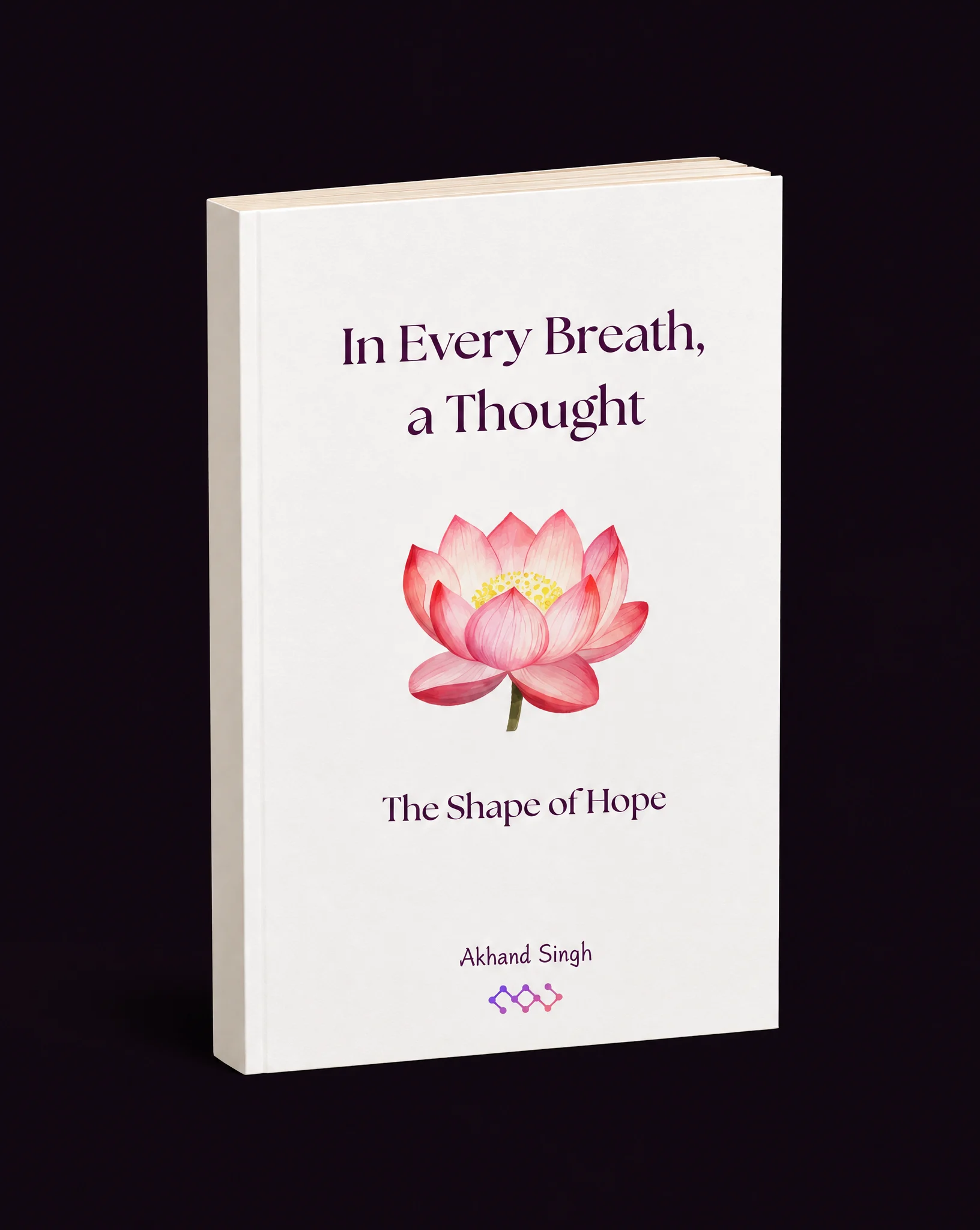
Akhand Singh

Like a dream,
I still sleep in us,
wrapped in a single sheet,
the warmth of our bodies
Memory functions through a constant tension between closeness and absence. When a person reflects on shared experiences, they rarely encounter a fixed record of those moments. Instead, they navigate a dynamic landscape where feelings of love and loss coexist. The emotional toll of clinging to past connections lies in the abrupt shift that can occur. Someone may comfortably dwell in the abstract notion of what once was, only to be jolted by the harsh reality of what has been lost.
This oscillation reveals a deeper understanding of human attachment. We build internal sanctuaries from accumulated sensory experiences—glances, shared spaces, and bodily warmth—and dependently view them as evidence of past permanence.
However, these constructions are inherently fragile. To dwell within them is to embrace a quiet vulnerability, as the very structures meant to preserve intimacy highlight the vastness of our current separation. The mind reaches back to reclaim a face, an expression, a shared breath, treating memory as a recoverable territory rather than a closed chapter.
When the journey into the past comes to an end, returning to the present is seldom a gentle process. Transitioning from internal reflection back to reality reveals the raw mechanics of survival after a change. Tears do not indicate a failure of reasoning; rather, they are a physiological response to reconciling two conflicting states of being. The self remains caught between the person who experienced the intimacy and the person who must now navigate the distance required to live without it.
With love, Akhand
P.S. These lines are from “The Shape of Hope.” Read the rest of the collection in “The Shape of Hope”