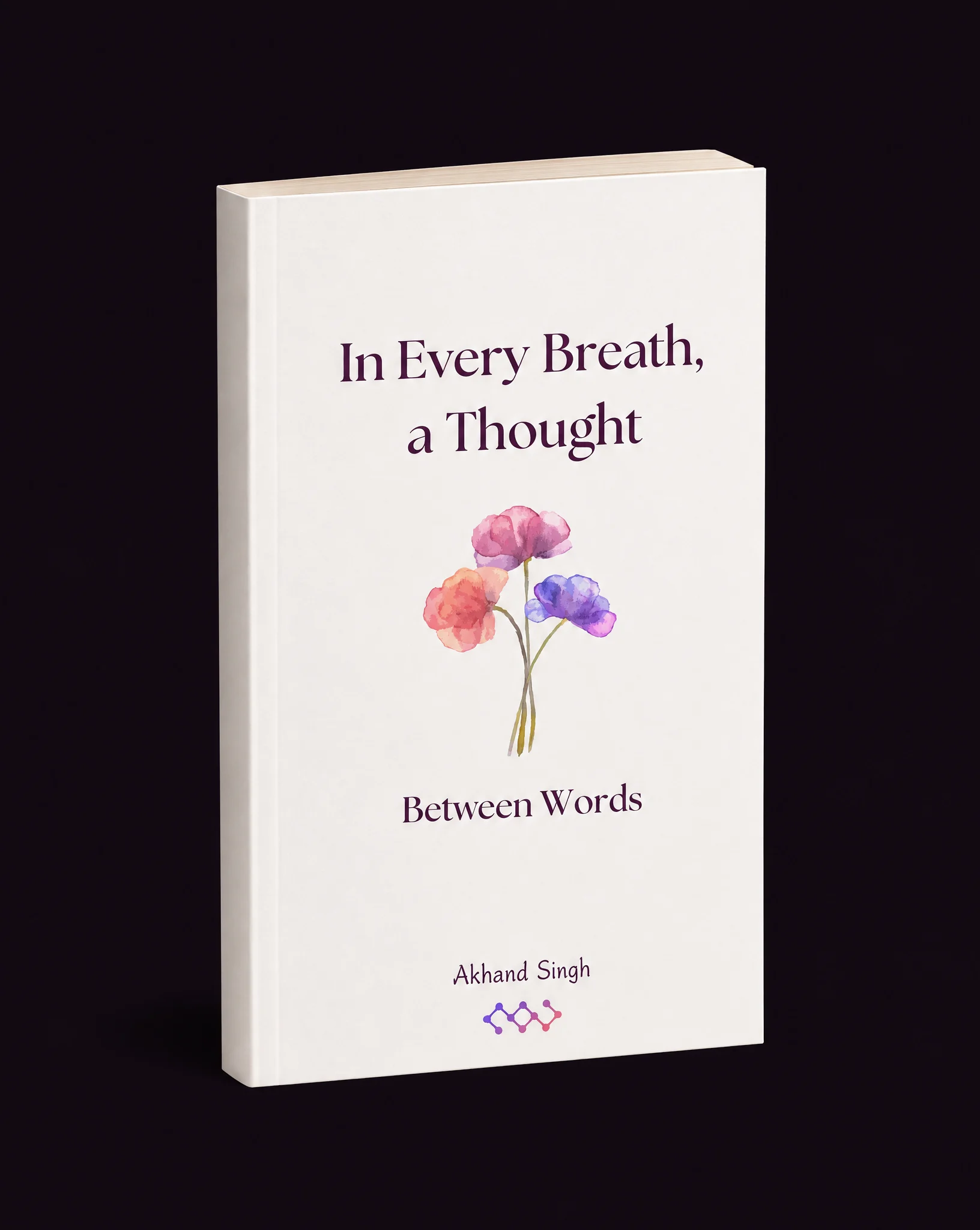
Akhand Singh

We were once friends,
And perhaps we will be friends of time.
When two people try to preserve a shared space that has begun to fracture, the effort itself often accelerates the collapse. We tend to frame separation as an acute moral failing, assigning blame to deliberate malice, selfishness, or deception. In reality, the breakdown is usually mechanical. Two distinct trajectories temporarily align, produce friction, and gradually diverge as the cost of alignment exceeds what either person can bear.
The impulse to exhaust oneself trying to rescue a dynamic stems from a misunderstanding of compatibility. We believe that continuous exertion can substitute for structural coherence. When that effort fails, the realization arrives that self-preservation often looks identical to selfishness from the outside. Both parties make decisions to survive the association, and each views the other’s retreat as a betrayal. The construction of justifications, defenses, and selective narratives becomes necessary to legitimize walking away without accepting total responsibility for the decay.
Resentment lingers only as long as the expectation of a different outcome remains active. Once the necessity of the division is accepted, the emotional weight shifts. The anger dissipates, replaced by an impersonal clarity about what was actually possible.
Time alters the nature of these associations. It strips away the immediate demands of mutual obligation, leaving only the neutral fact that the connection existed. When the urgency to defend one’s innocence fades, what remains is an understanding that some endings are dictated by the simple momentum of individual preservation.
With love, Akhand
P.S. These lines are from “Between Words.” Read the rest of the collection in “Between Words”